
If you read this newsletter, you are aware of the ongoing struggle between the data center industry and conservation groups in Virginia. Most of those proposed projects are in suburban counties like Prince William or Loudoun or in the exurbs.
In rural Virginia, a separate struggle is playing out as utility scale solar seeks to establish a foothold in Virginia. But their industrial developments are causing angst in Virginia’s Farm Belt and there’s no easy answer.
The issue goes back to 2020, when the General Assembly passed the “Clean Economy Act,” which set ambitious goals for renewable technologies in Virginia, mandating that they comprise 100% of Virginia’s energy load by 2045. (Right now, it’s less than 10%).
Of course, nobody at that time understood how the “AI” revolution would transform the grid: creating a massive need for new data centers and related electrical infrastructure. The resulting demand will double Virginia’s expected need for electricity.
Of course, the most common form of renewable energy comes from solar panels. As a State Senator, I authored the “Solar Freedom Act” of 2012 which allowed widespread use in suburban HOA communities.
The issue becomes more complicated when developers seek large tracts of land to build a commercially viable “solar farm” that will export energy onto the grid. The most economical way is to find flat open land and build on it — which means you’re often taking farmland or forestland out of circulation. And that’s a problem.
Last Tuesday, July 15, the Board of Supervisors in rural King George County considered a 118-megawatt solar project, enough energy to light up 50,000 homes. The project would clear cut nearly 600 acres of mature trees in a Tidewater county between two major rivers and irreversibly alter properties historically agricultural. Of course, the counter-argument is that the project would provide a robust revenue stream and, hey, it’s solar!
By a 4-1 vote, the County rejected the project. It’s not that the developer didn’t make an effective presentation — they did. But the County did not want to see prime farmland and forests converted into an industrial use.
Like the data center debate, the utility solar issue is playing out all over Virginia. While essentially a local zoning issue, it raises a statewide concern — is it possible to build enough solar to fully support Virginia’s AI economy? The answer is likely no.
Of course, no statewide candidate is talking about this issue. Most don’t even understand it. (More on that later).
But it will be a massive limitation on Virginia’s economic future, without a major change in direction.
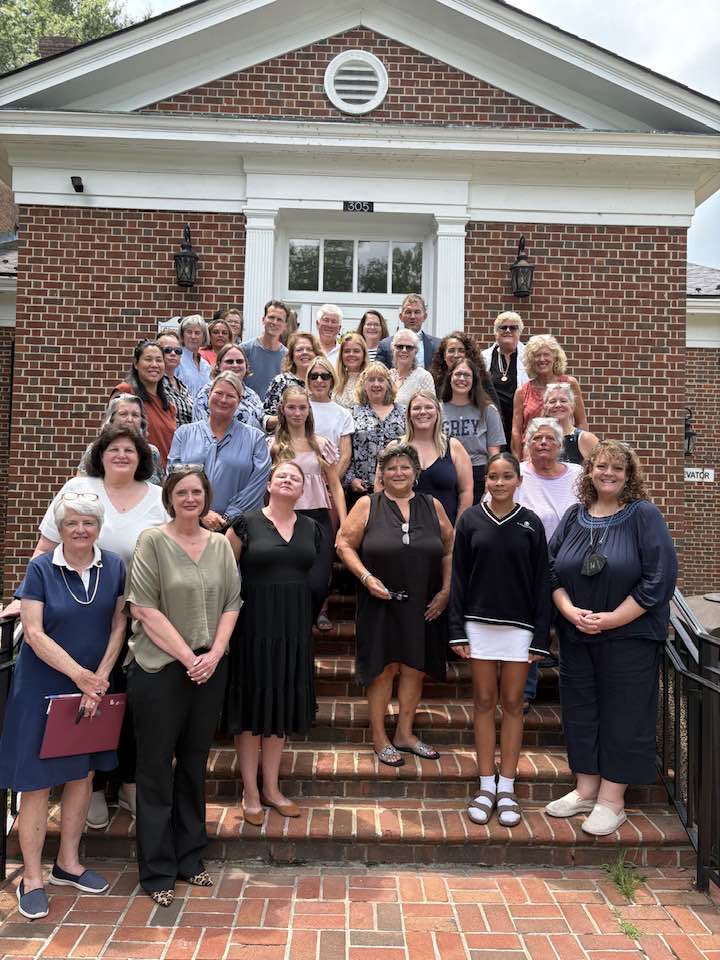
JCP Notes: Last Thursday, I was in rural Tappahannock, Virginia on behalf of concerned alumnae seeking to save all-girls’ St. Margaret’s School, which is slated for closure. We have asserted a “trust” theory on behalf of the School’s major donors, who want to bring in a new operator. Senator Richard Stuart (R-Westmoreland) is my co-counsel, which is great. Here’s a photo of our clients in front of the courthouse.
I hope everyone is enjoying the summer.