Dear Friends and Virginians:
This past week — with no re-election to worry about — Sharon and I traveled to Seoul, where I’m teaching a remote class at Sogang University Law School. (To quote Alanis Morrissette … isn’t it ironic?). It was great to meet my students who are studying to become international lawyers.
Here’s a photo of our class having lunch in downtown Seoul.

While in Korea, I was interviewed by “The Law Times of Korea,” which asked me the existential issue of our time:
Yes, no, I don’t know. (In that order)
Let’s begin with the legal authority.
“Regulating foreign commerce” is the domain of the U.S. Congress under Article I, Section 8 of the Constitution. In 1977, Congress passed the International Emergency Economic Powers Act (IIEPA), which allows the President to dictate unilateral policies on trade, including the enactment of tariffs, whenever there is a “emergency.”
Where have we heard this idea before?
Under IIEPA, the President can raise tariffs 10% on all countries and by an unlimited amount on nations holding a major trade deficit with the U.S. The latter category covers all the major economies of East Asia: China, Japan, Vietnam, and South Korea.
South Korea is a highly-successful economy heavily tied to the American market. They need our consumers; in return, we need their goods and technology. (LG and Samsung are global electronic producers). Later this month, the President will visit South Korea and Japan in a highly-important trade visit. In return for holding back tariffs, he will be seeking massive investment in the States, including $350 billion from the ROK.
A deal is likely in the works, because that’s what Donald Trump does … and it fits with Asian culture.
The timing is critical, as the U.S. Supreme Court is scheduled to hear oral argument on the legality of “the Trump tariffs” in the first week of November, which means a decision will likely issue around Thanksgiving.
In my opinion, the Roberts court — despite massive pressure otherwise — will put a lid on the Presidential powers by finding that “an emergency” cannot be indefinite but must have objective parameters. (This btw is the exact same legal argument I used against the Northam “shutdown” orders in 2020)
And, therefore, the Trump tariff powers must come to an end, unless they are approved by Congress, which is unlikely.
The President is aware he’s on a short time-line, which is why I expect a deal in Japan-Korea and perhaps even China by early November. These are the economies, along with the USA, that are driving global commerce.
A trade deal is likely coming and not a moment too soon for the President.
JCP Notes: In Korea, I taught two live classes at Sogang, then traveled to Incheon City, where I visited with student leaders at George Mason and checked in on its LLM program which we started in 2024.
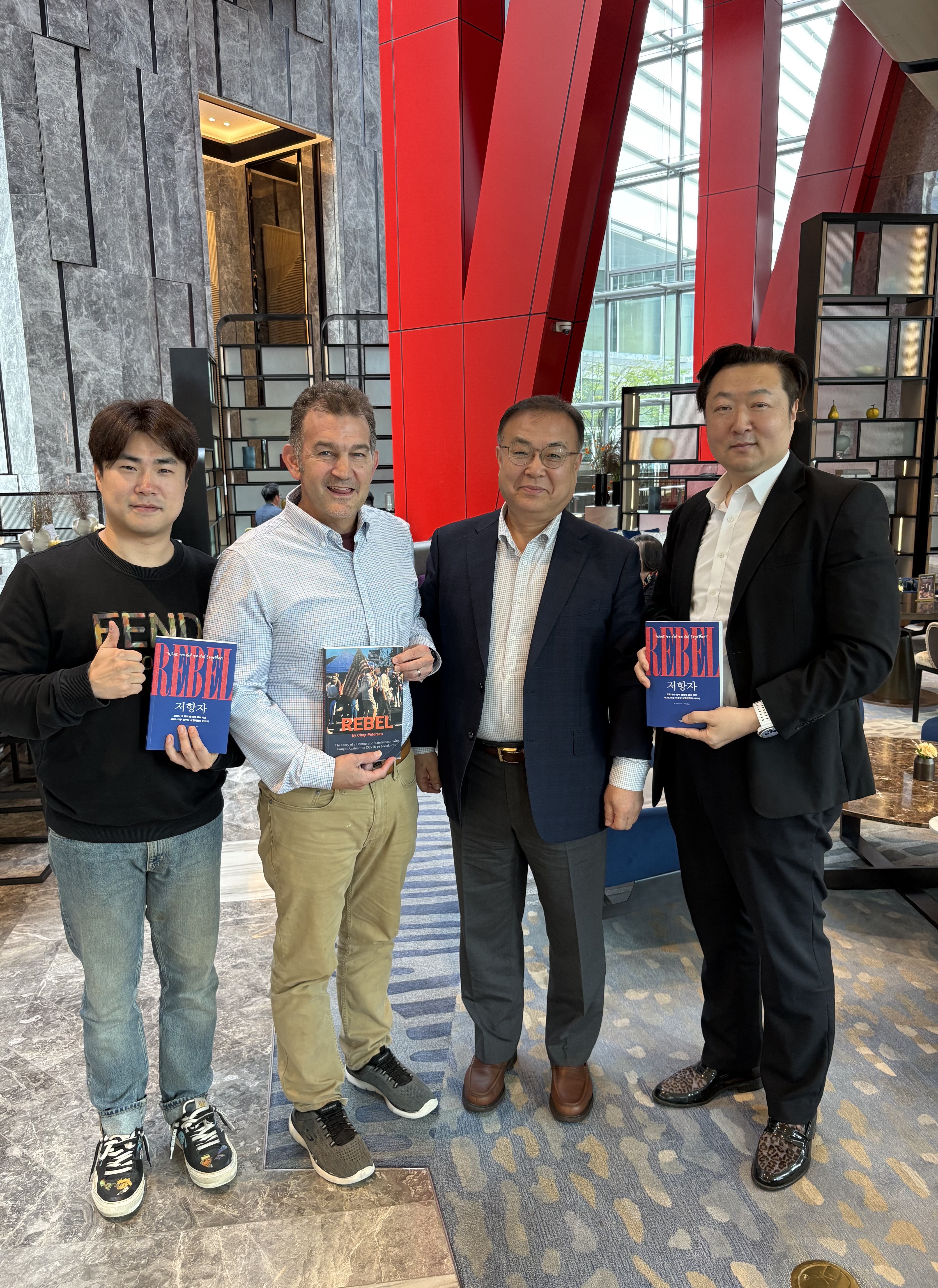
While in Seoul, I also received advance copies of my book “Rebel” (Jeohangja) published in Korean by Mirae Publishing. You can purchase it here.
Yes, I’m aware there are state elections underway and, as a member of the State Board of Elections, that’s what I’m currently allowed to say.
I’ll be voting.
Peace,
Chap